Clinic management software buyer's guide Bangladesh
A practical 2026 checklist for Bangladeshi polyclinics and diagnostic centers comparing clinic management software vendors.
ChamberBD Editorial Team
· 6 min read
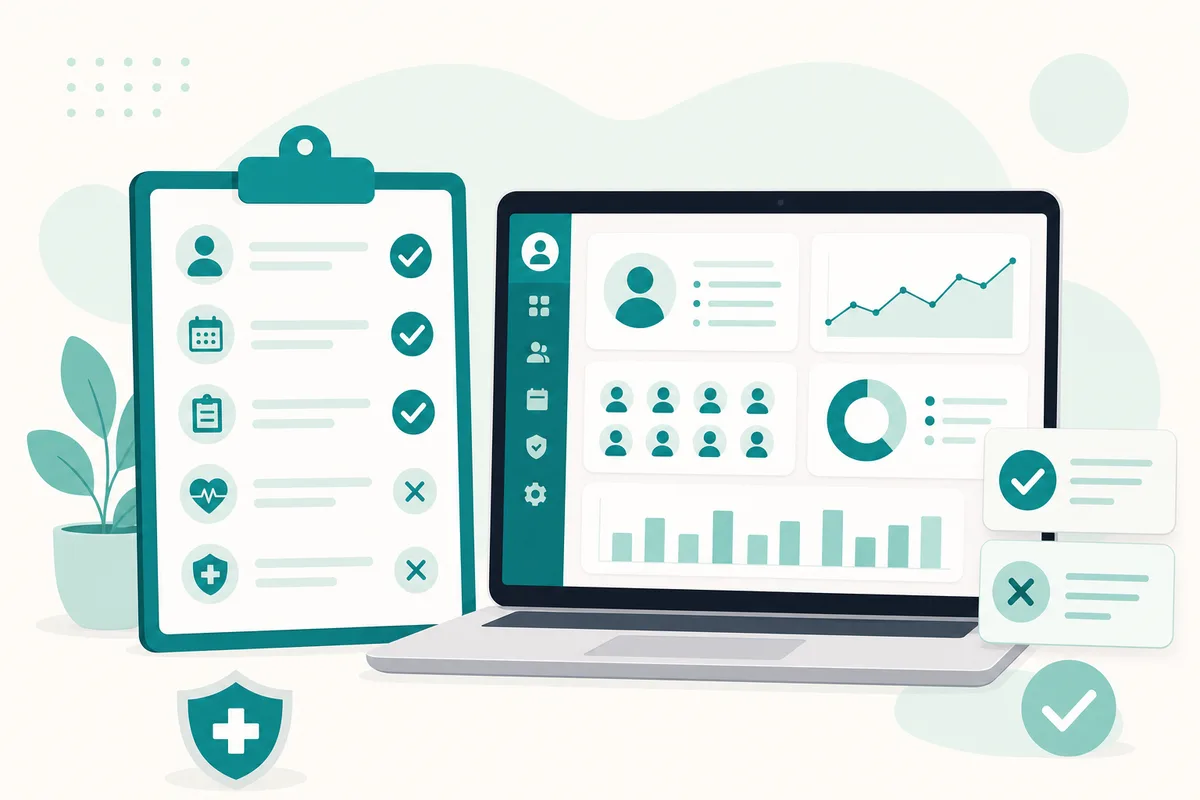
Choosing the right clinic management software buyer’s guide Bangladesh teams can rely on in 2026 is not just an IT decision. For a polyclinic, diagnostic center, or physiotherapy practice, the software affects reception speed, doctor satisfaction, patient records, billing accuracy, and daily cash control.
Bangladeshi clinics often run with mixed workflows: walk-in serials, phone appointments, consultant chambers, investigation invoices, revenue-share doctors, monthly staff salary, and owners who need reports from more than one branch. A generic appointment app may look attractive in a demo, but it can fail when your receptionist has three doctors asking for separate token queues at 7 pm.
Use this buyer’s guide as a practical checklist before you sign up with any vendor. The goal is to ask better demo questions, compare real workflow fit, and avoid paying for software that cannot support how clinics in Bangladesh actually operate.
Clinic management software buyer’s guide Bangladesh: 2026 checklist
Start with your daily workflow, not with a feature list. Before a demo, write down how your clinic currently handles patients from entry to payment to doctor consultation to follow-up. Then evaluate each software against those steps.
A useful 2026 checklist should cover:
- Multi-doctor scheduling with separate consultation rules
- Reception token or serial queue by doctor
- Live token board for waiting patients
- Appointment fees by visit type, such as new visit, follow-up, report showing, or physiotherapy session
- Shared patient profile and visit history
- E-prescription with a practical medicine database
- Doctor revenue-share calculation and payout statement
- Staff attendance, payroll, advances, and deductions
- Expense tracking and invoice records
- Roles and permissions for reception, accounts, doctors, and admin
- Multi-branch or multi-center reporting if you operate more than one location
- Bangla and English usability for local staff
- Clear pricing with implementation and support expectations
During comparison, do not simply ask, “Do you have this feature?” Ask the vendor to show the exact workflow using a sample doctor, receptionist, patient, and payment scenario. ChamberBD Clinic, for example, is built around Bangladeshi multi-doctor clinic workflows, so its demo can be tested with per-doctor serials, revenue share, payroll, and Bangla-English UI rather than only generic scheduling screens.
1. Multi-doctor scheduling and reception flow
For a single-doctor chamber, basic appointments may be enough. For a polyclinic or diagnostic center, scheduling must handle multiple doctors with different days, time slots, fees, and patient flow rules.
In a demo, check whether the software can:
- Create separate schedules for each doctor
- Handle walk-in patients and booked appointments together
- Mark visit type and fee at the time of entry
- Search returning patients quickly by mobile number or name
- Move or cancel appointments without losing patient history
- Show today’s doctor-wise queue clearly to reception
The key point is reception speed. If your front desk has to open five pages to register one patient, the system will not survive a busy evening. Ask the vendor to simulate a rush-hour scenario: three doctors sitting at the same time, one follow-up patient, one new patient, one patient changing doctor, and one cancelled serial.
Also consider whether the software separates clinical appointments from diagnostic billing. Some centers need both, but not every clinic management system handles both equally well. If your main need is doctor chamber management, prioritize serial control, fee collection, doctor payout, and prescription flow first.
2. Token board and waiting-room experience
A token or serial system is extremely important in Bangladesh because many patients arrive early and wait physically at the clinic. A clear token board reduces repeated questions at reception and helps staff manage crowd pressure.
Look for a system that supports doctor-wise queues rather than a single combined list. In a multi-doctor clinic, token 12 for a medicine specialist and token 12 for a gynecologist are different queues. The live board should make this clear.
Questions to ask during the demo:
- Can each doctor have a separate token or serial queue?
- Can reception call, skip, hold, or complete a token?
- Is there a live display board for patients?
- Can staff see which patients are waiting, inside, done, or absent?
- What happens if a doctor arrives late or changes room?
Do not ignore the physical setup. Ask whether the token board works on a TV or monitor through a browser, and whether it updates without manual refresh. A good queue system should make reception calmer, not add another screen that staff forget to update.
3. E-prescriptions and medicine database quality
E-prescription is valuable only if doctors can write quickly. If brand names, generic names, strengths, and dosage instructions are difficult to find, doctors will return to paper.
For Bangladesh, medicine search matters because doctors commonly think in a mix of brand name, generic, strength, and company. A useful e-prescription module should allow quick selection, diagnosis notes, advice, investigation suggestions, and repeat prescription support. ChamberBD Clinic includes an e-prescription workflow backed by a 23,000+ medicine catalog in Bangla and English, which is important for local usability.
During evaluation, ask:
- Can doctors search medicines by brand and generic name?
- Does the system support Bangla and English prescription content?
- Can previous prescriptions be copied or reused for follow-up?
- Can doctors add custom advice or medicines when needed?
- Is the printed prescription format suitable for your clinic pad?
- Can patient visit history be viewed before writing the next prescription?
Also confirm access control. Reception should not be able to edit clinical notes unless you explicitly allow it. Doctors should see their relevant patient visits, while owners or admins may need broader access depending on clinic policy.
4. Doctor revenue share and payout control
Many Bangladeshi clinics pay doctors through revenue share: a percentage of consultation fees, a fixed amount per patient, or a mixed arrangement. This is where manual accounts often become messy.
A proper clinic system should calculate doctor earnings from actual patient entries and payments, not from a separate Excel sheet. It should support percentage or fixed share models and produce payout statements that both accounts and doctors can understand. For a deeper explanation of common models, read this guide on doctor revenue-share models in Bangladesh.
Ask every vendor to demonstrate:
- Percentage-based share for one doctor
- Fixed amount per patient for another doctor
- Different fees by visit type
- Follow-up or report-showing fee rules
- Doctor-wise collection and payable report
- Adjustments, discounts, or cancelled visits
- Payout statement for a selected date range
This is a high-risk area because small errors create disputes. If the software cannot clearly explain how it calculated a doctor’s payable amount, your accounts team will still depend on manual reconciliation. ChamberBD Clinic includes a doctor revenue-share engine with percentage or fixed calculations and payout statements, which is useful for clinics where multiple consultants sit under different arrangements.
5. Staff, payroll, expenses, and permissions
Clinic software should not stop at patients and doctors. Owners also need daily control over staff attendance, salary, advances, expenses, and role-based access.
For staff management, check whether the system can record attendance and calculate payroll-related information in a way your admin team can follow. If staff take salary advances, the software should keep those records visible so month-end settlement is not based on memory.
For finance operations, look for:
- Expense categories such as rent, utilities, consumables, maintenance, and marketing
- Invoice records for patient payments
- Daily collection summaries
- Cash and due tracking where applicable
- User-wise activity or accountability
Roles and permissions are especially important. A receptionist may need to create patients and collect fees, but not view payroll. An accounts user may need expense and payout reports, but not edit prescriptions. A doctor may need clinical records, but not branch-wide financial reports.
In the demo, ask the vendor to create a receptionist user and show what that user cannot access. Many systems talk about permissions, but practical role separation is only clear when tested.
6. Multi-branch reports, Bangla UI, and pricing sanity
If you run more than one center, reporting becomes a major buying criterion. You need to see branch-wise collections, doctor-wise performance, expenses, and operational summaries without asking each branch to send screenshots.
Ask whether the software supports multi-center reporting from a central admin view. Also ask whether branch staff can be restricted to their own branch. Without branch-level controls, a multi-location system can become confusing or risky.
Bangla UI is another practical factor. Many clinic teams are comfortable with English menus, but reception and admin staff often work faster when important fields are understandable in Bangla. A Bangla + English interface can reduce training friction and mistakes.
Pricing sanity means looking beyond the monthly fee. Ask:
- What is included in the monthly plan?
- Is there any setup, migration, training, SMS, or support charge?
- Are there limits on doctors, users, patients, branches, or prescriptions?
- What happens if you upgrade later?
- Can you export your data if you stop using the software?
- Is support available during your clinic’s busy hours?
ChamberBD Clinic plans start from ৳500/month, and you can review the current clinic software pricing before comparing other vendors. You can also scan the full clinic management features to prepare your internal checklist before a demo.
Questions to ask any vendor in a demo
A good demo should use your workflow, not only the vendor’s perfect sample data. Send a short scenario before the meeting and ask them to perform it live.
Use these questions:
- Can you register a returning patient, assign a doctor-wise token, collect the correct visit fee, and show the patient on the live board?
- Can the doctor open the patient record, write an e-prescription, and print it within the same flow?
- Can you show how a percentage-share doctor and fixed-share doctor are calculated for the same day?
- Can you generate a payout statement and explain every line?
- Can you record a staff advance and show how payroll handles it?
- Can a receptionist see payroll or owner reports? If not, show the permission settings.
- Can you show branch-wise and combined reports for two centers?
- What data can we export, and in what format?
- What support channel do we use when reception is stuck during patient hours?
Take notes during the demo and score each area as: works well, needs workaround, or not available. Workarounds are acceptable for rare tasks, but not for daily reception, prescription, accounts, or payout workflows.
Frequently asked questions
What is the most important feature for a Bangladeshi polyclinic?
For most polyclinics, the most important feature is smooth doctor-wise patient flow: appointment, token or serial, fee collection, consultation, and prescription. If reception cannot manage multiple doctors quickly, other features will not get used properly.
Should I choose the cheapest clinic management software?
Not always. A low monthly cost can become expensive if you still need manual Excel sheets for doctor payout, payroll, or branch reports. Compare total workflow coverage, support, data access, and pricing transparency before deciding.
Do small clinics need revenue-share automation?
If you have only one owner-doctor, maybe not immediately. But if visiting consultants sit at your clinic, revenue-share automation reduces disputes and saves accounts time. It is better to set up clean payout rules early than rebuild records later.
The best software is the one your reception, doctors, accounts team, and owner can actually use every day. If you want to test a Bangladesh-focused workflow, you can start free trial for 14 days or see the live demo before speaking with your team.
Run your clinic on autopilot
ChamberBD Clinic handles reception and the live token queue, e-prescriptions, doctor revenue-share and payroll — from ৳500/month, in বাংলা and English.