Clinic staff attendance and payroll without khata
A practical Bangladesh clinic guide to staff attendance, leave, advances, deductions, and clean monthly payroll without spreadsheet chaos.
ChamberBD Editorial Team
· 6 min read
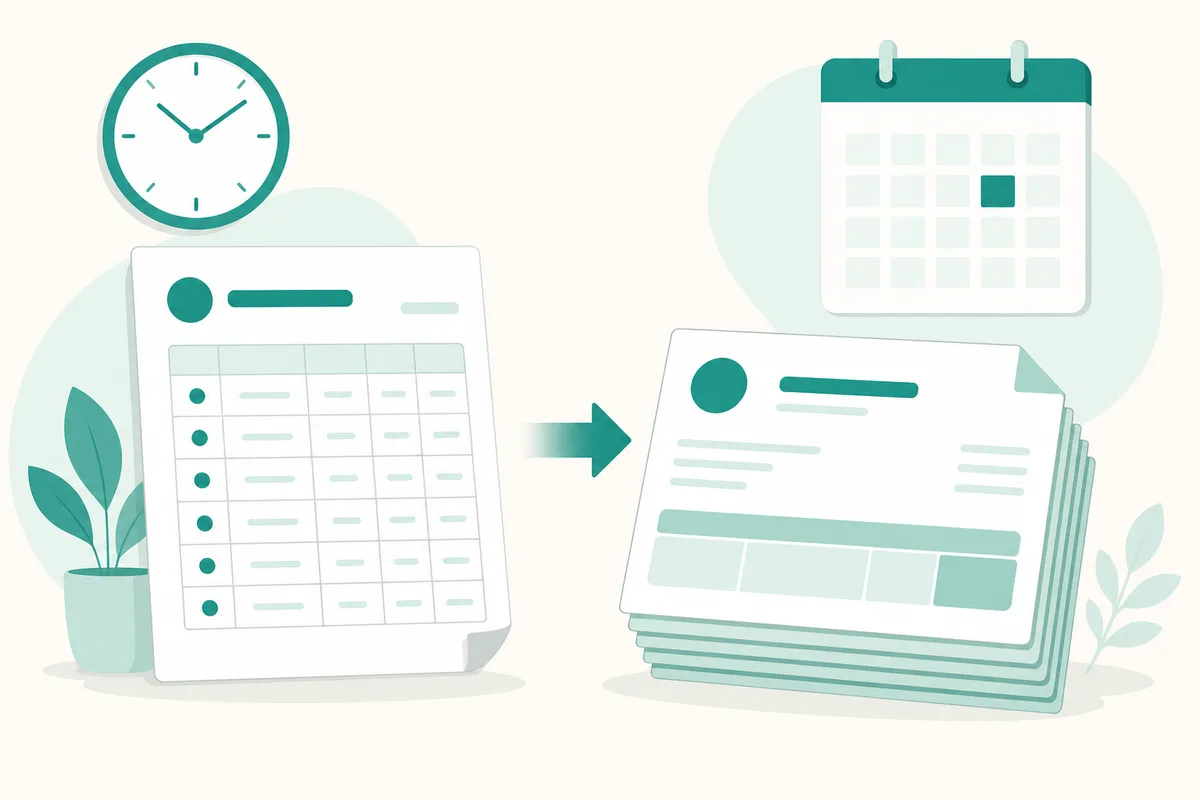
For many Bangladeshi clinics, clinic staff attendance and payroll still starts in an attendance khata: names in the left column, arrival time written by hand, a few signatures, and then a long end-of-month calculation in Excel. It works when the clinic is small, but it becomes stressful when receptionists, nurses, assistants, physiotherapy staff, cleaners, and admin people work different shifts.
The real problem is not only “who came today.” Payroll needs clean answers to practical questions: who was late, who was absent, who took approved leave, who received a salary advance, and how much should be recovered this month? If these answers are unclear, paying staff on the 1st becomes a rush of phone calls, calculator work, and arguments.
A better system does not need to be complicated. The goal is to turn daily attendance into a monthly payroll summary that the owner or manager can trust. This guide explains a practical workflow for Bangladeshi clinics and physiotherapy centers that want to move from khata-based attendance to clean salary processing.
Why clinic staff attendance and payroll gets messy
Clinic payroll is different from a simple office payroll because the day is built around patient flow. A receptionist may need to arrive before the first doctor sits. A nurse or assistant may support one chamber in the morning and another in the evening. A physiotherapy center may have therapists working long appointment blocks, while support staff handle cleaning, billing, and patient movement.
Common reasons payroll becomes messy include:
- Staff write attendance after arriving late, with no clear check-in time.
- Half-day, casual leave, sick leave, and unpaid leave are mixed together.
- Salary advances are given in cash but not recorded in a central place.
- Deductions are calculated manually and change depending on who prepares payroll.
- Owners approve exceptions verbally, then forget them at month-end.
- Different branches or centers follow different rules.
The result is predictable: payroll takes too long, staff lose trust in the calculation, and managers spend valuable time checking old pages or spreadsheet versions. A clinic does not need a corporate HR department to fix this. It needs a clear attendance-to-payroll process.
Start with clean check-in and check-out records
The foundation of payroll is the daily record. If attendance is unclear, every deduction becomes questionable. A good attendance record should capture at least the staff member, date, check-in time, check-out time, and any note such as late arrival, early leave, approved leave, or duty adjustment.
For clinics, check-out is just as important as check-in. A staff member may arrive on time but leave early during the evening rush. Another may stay late because the last doctor’s queue ran longer than expected. Without check-out records, overtime discussions and early-leave deductions become guesswork.
A practical attendance workflow can be simple:
- Define reporting time by role or shift, not one rule for everyone.
- Record check-in as soon as the staff member arrives.
- Record check-out when duty ends, especially for split shifts or evening chambers.
- Add a manager note for special cases, such as emergency leave or duty exchange.
- Review exceptions weekly instead of waiting until salary day.
This is where clinic management software can help, because attendance is connected with the rest of the clinic day. In ChamberBD Clinic, staff attendance can sit alongside reception, patient flow, expenses, and payroll, so the manager does not need separate khata, Excel, and cash notes for each activity.
Set a late, leave, and absence policy before payroll day
Software cannot solve an unclear policy. Before you calculate payroll, decide how your clinic treats late attendance, leave, half-day, absence, and unpaid leave. The policy should be short enough for staff to understand and consistent enough for managers to apply.
For example, a clinic may define:
- The official duty time for each role or shift.
- Whether a grace period is allowed for late entry.
- How many late days trigger a deduction, if any.
- What counts as half-day versus full-day absence.
- How staff request leave and who approves it.
- Which leave is paid and which leave is unpaid.
- How emergency leave should be documented.
Avoid changing rules at the end of the month. If a receptionist is late five times, the deduction rule should already be known. If a physiotherapist takes leave during a busy appointment day, the approval should be recorded at the time, not debated later.
For small clinics, the best policy is usually practical rather than complicated. Keep it written, share it with staff, and apply it consistently. When exceptions are needed, record them with a reason. This protects both the clinic owner and the staff member.
Track salary advances and recovery properly
Salary advances are common in Bangladesh. A staff member may request an advance for family needs, medical costs, rent, travel, or an emergency. Many clinic owners support staff in these situations, but payroll becomes confusing when advances are given informally and not recovered clearly.
A proper advance record should include:
- Staff name and role.
- Advance amount in ৳.
- Date paid.
- Payment method, such as cash or bank/mobile transfer.
- Approved by whom.
- Recovery plan, such as full recovery this month or split over multiple months.
- Balance remaining after each payroll run.
The recovery plan matters. If a staff member takes ৳10,000 as an advance and the clinic plans to recover ৳2,000 per month, the payroll system should show that automatically during salary calculation. Otherwise, the manager must remember the balance manually, which creates mistakes.
Also separate salary advances from bonuses, incentives, and reimbursements. An advance is recoverable. A reimbursement for clinic work, such as buying supplies with personal money, should not be treated as a salary advance. Clear categories prevent wrong deductions and staff frustration.
Run monthly payroll with deductions in a repeatable way
Month-end payroll should be a process, not a panic. The same steps should happen every month so the owner can review salary before payment day. If the clinic wants to pay staff on the 1st, payroll preparation should start before the month ends, not on the morning of the 1st.
A repeatable payroll run may look like this:
- Review attendance exceptions for the month.
- Confirm approved leave, unpaid leave, absence, late deductions, and early-leave deductions.
- Check salary advances and recovery amounts.
- Add any fixed allowances or approved adjustments.
- Review deductions before finalizing.
- Generate the salary payable amount for each staff member.
- Pay staff and keep the payroll statement for records.
For clinics with multiple doctors and departments, it helps when payroll is part of the same operating system used for daily work. ChamberBD Clinic includes staff attendance and payroll with advances, expenses, invoices, roles, and reports, which can reduce the back-and-forth between notebooks and spreadsheets. You can explore the broader clinic management features to see how attendance and payroll fit into the full clinic workflow.
The key is transparency. Staff should be able to understand why their net salary is lower or higher than expected. A simple statement with basic salary, deductions, advance recovery, and final payable amount is better than a verbal explanation after payment.
Avoid spreadsheet chaos before the 1st
Spreadsheets are useful, but they become risky when multiple people edit different versions. One file may have updated attendance, another may have advance recovery, and a third may have final salary. By the time payroll is ready, nobody is fully sure which version is correct.
To avoid this, create one source of truth. Whether you use software or a controlled internal file, decide where the final attendance, leave, advance, and payroll records live. Do not keep separate unofficial copies for “quick calculation” unless they are reconciled.
Practical controls include:
- Freeze attendance changes after manager review, except approved corrections.
- Keep all salary advances in one place.
- Assign one person to prepare payroll and one person to approve it.
- Keep expense reimbursements separate from salary advances.
- Save monthly payroll statements for future checking.
- Review multi-center payroll separately before combining totals.
If your clinic has more than one branch, consistency becomes even more important. A Banani center and a Mirpur center, for example, should not follow completely different leave or advance rules unless the owner has intentionally approved that difference. Multi-center reporting helps owners compare salary cost, attendance issues, and branch-level operations without chasing separate files.
What clinic owners should review every month
Payroll is not only an accounting task. It also shows management issues. If one department has frequent late attendance, it may affect patient service. If salary advances are increasing, the owner may need to understand staff pressure or cash planning. If a certain shift always runs late, the clinic may need to adjust duty times.
At the end of each payroll cycle, review:
- Total salary payable for the month.
- Total deductions by category.
- Total advance recovered and remaining advance balance.
- Frequent late or absent staff members.
- Leave patterns by department or center.
- Any manual adjustment made outside normal rules.
- Payroll cost compared with clinic revenue and expenses.
This review does not have to be long. Even 20 minutes after payroll finalization can help the owner identify patterns early. When the same staff attendance and payroll data connects with expenses and reports, decisions become clearer. ChamberBD Clinic is designed for Bangladesh clinic workflows, with Bangla and English UI, staff attendance, payroll advances, expenses, invoices, and role-based access in the same system. Plans start from ৳500/month, and you can check the current ChamberBD Clinic pricing when planning your budget.
Frequently asked questions
Can a small clinic manage payroll without HR staff?
Yes. A small clinic can manage payroll well if attendance, leave, advances, and deductions are recorded consistently. The important part is to follow the same monthly process and avoid last-minute manual calculation.
How should we handle salary advances?
Record every advance with date, amount, approver, and recovery plan. During payroll, deduct only the agreed recovery amount and keep the remaining balance visible for the next month.
Should late attendance always create a salary deduction?
Not always; it depends on your clinic policy. Some clinics use a grace period or deduct only after repeated late entries, but the rule should be written, shared with staff, and applied consistently.
Clean payroll starts with clean daily records. If your clinic is ready to move beyond attendance khata and spreadsheet stress, you can start free trial for 14 days or see the live demo in one click.
Run your clinic on autopilot
ChamberBD Clinic handles reception and the live token queue, e-prescriptions, doctor revenue-share and payroll — from ৳500/month, in বাংলা and English.